
Top Executive Assistant Staffing Firms: Best Agencies for Tech Companies in 2026

Your calendar is packed, product deadlines loom, and investor calls keep slipping because no one’s guarding your time.
You’re not alone—94 percent of office-support leaders struggle to find skilled admin talent, and 60 percent have turned to contract help just to stay on track.
This guide solves that problem. We analyzed two dozen reports, salary guides, and customer reviews to rank ten agencies with the speed, tech know-how, and pricing transparency your team needs—so you can stay focused on shipping code.
Why tech companies need top-tier executive assistants
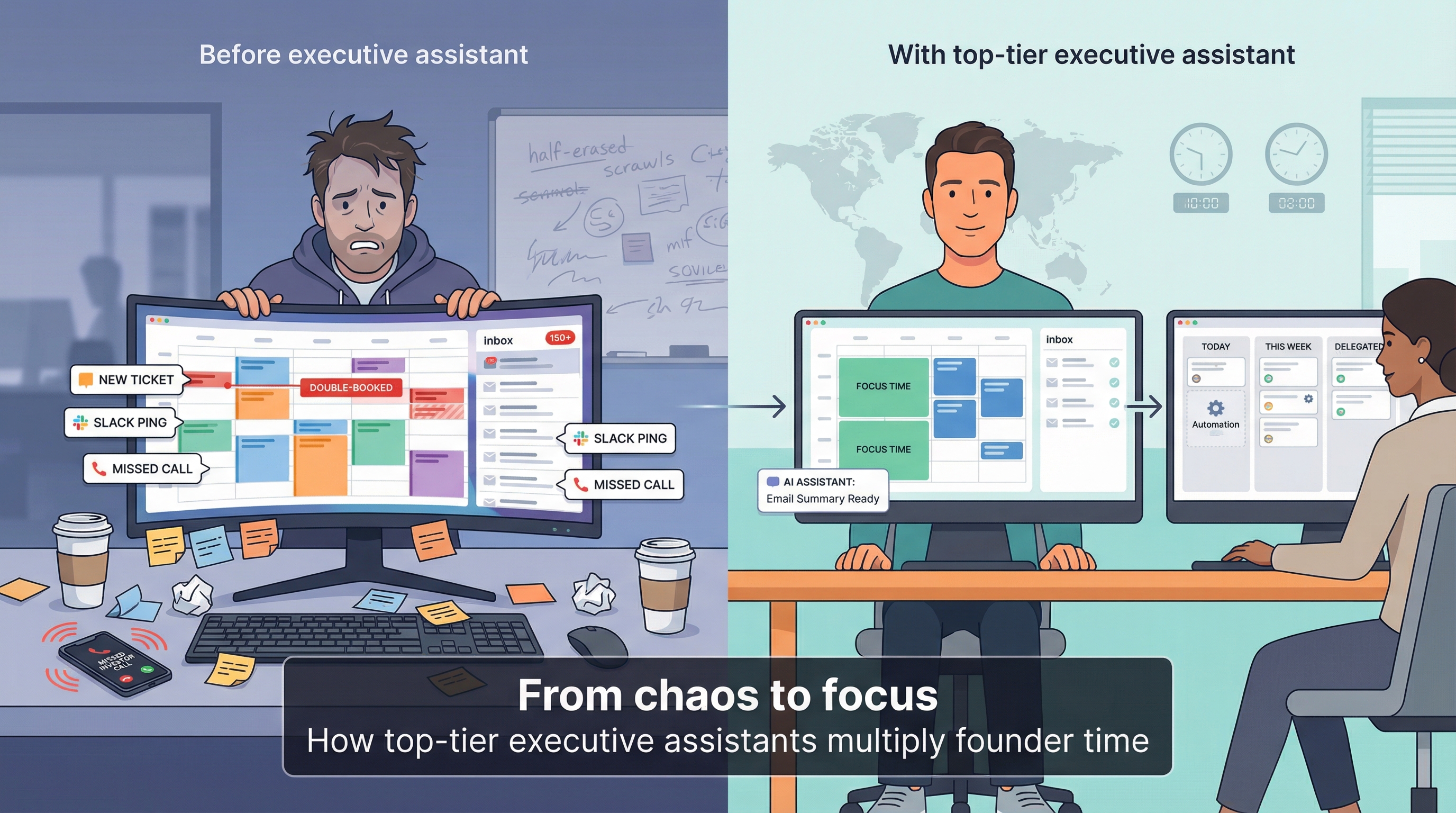
Speed rules in software. Features ship weekly, investor decks change overnight, and meetings stack faster than Jira tickets. Without a skilled executive assistant, crucial follow-ups stall and energy drains into inbox triage.
The talent crunch compounds the problem. According to an HR Dive report, 95 percent of tech leaders struggle to hire qualified support staff. When experienced admins are scarce, founders end up “DIY-ing” scheduling and vendor coordination. Hours disappear, strategic work slips, and burnout creeps in.
A high-caliber EA flips that equation. The right partner shields focus time, maintains momentum across time zones, and flags issues before they escalate. In distributed teams, an EA serves as the connective tissue, aligning calendars, documents, and stakeholders who rarely share a room.
Modern assistants also bring technical horsepower. They build Notion dashboards, automate Zapier workflows, and draft first-pass emails with AI tools. That blend of soft skills and digital fluency turns an EA into an operator, not a note-taker.
For growth-stage companies, the payoff is measurable. Founders who delegate 20 routine hours a week reclaim a half-day every week for product vision or investor relations. Multiply that by a leadership team, and the return dwarfs the cost of hiring through a top agency.
Bottom line: in 2026’s race for market share, a seasoned executive assistant is no longer a perk. It is a force multiplier tech companies can’t afford to skip.
How we picked the agencies
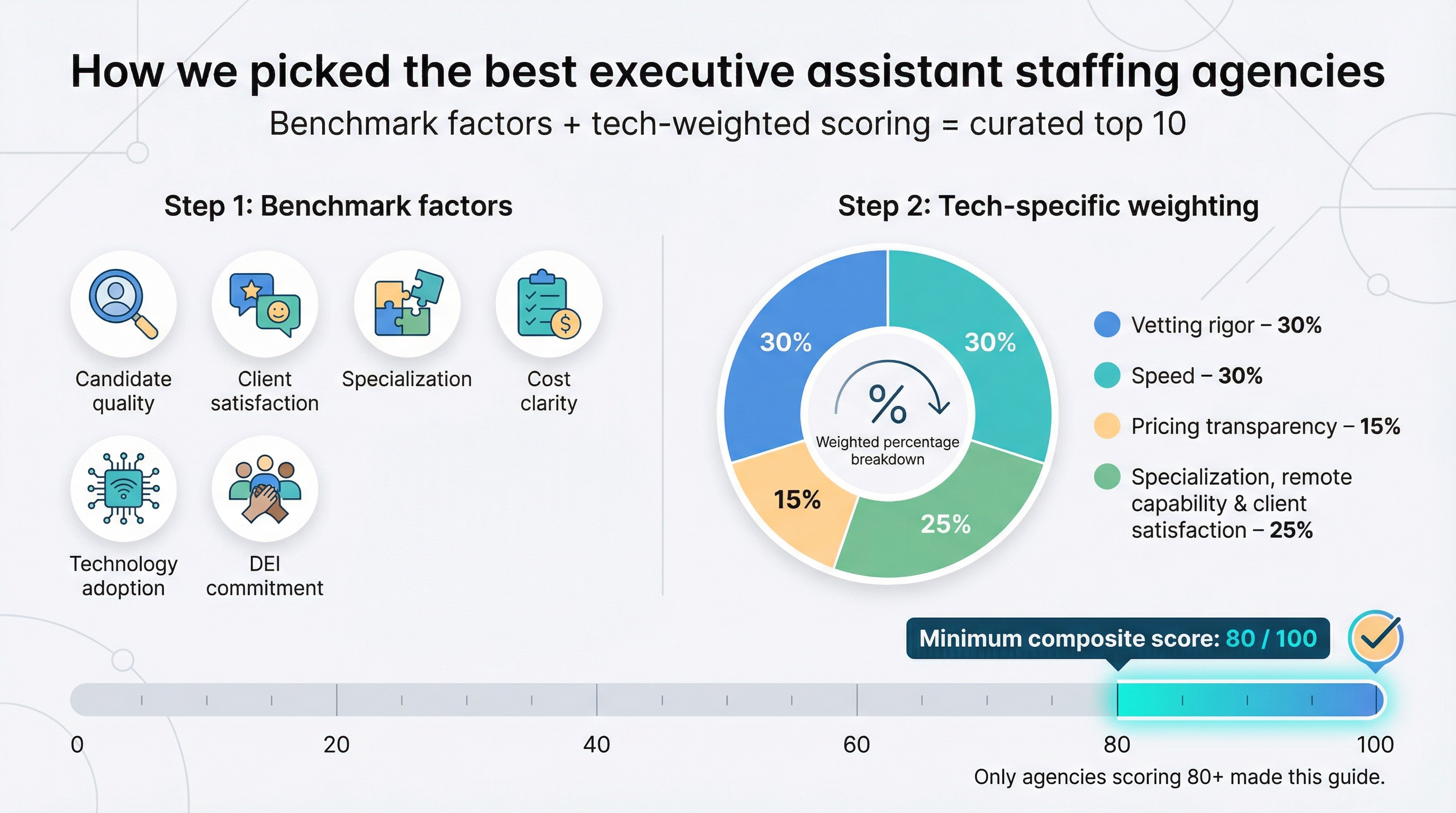
We started with a benchmark from The AI Journal, which scored executive-assistant staffing firms on six factors: candidate quality, client satisfaction, specialization, cost clarity, technology adoption, and DEI commitment.
Next, we tuned the rubric for tech needs. Vetting rigor and speed each counted for 30 percent of the total, pricing transparency for 15 percent, and the remaining 25 percent covered specialization, remote capability, and client satisfaction. Agencies needed a composite score of at least 80 out of 100 to make this guide.
Every firm ahead can connect you with a battle-tested EA who works in Slack, automates Zapier workflows, and speaks startup fluently.
1. C-Suite Assistants: surgical matches for AI and high-growth leaders
C-Suite Assistants focuses on one thing: pairing career executive assistants with the C-level. Founded in New York in 1999, the firm treats every search like an executive hire, not a temp placement.
We like their depth with venture-backed companies. Recruiters dig beyond skills to map work style, time-zone overlap, and preferred tools. Need someone who lives in Notion, automates Slack reminders, and grasps the security stakes of machine-learning pipelines? Their top-tier EA recruitment for artificial intelligence firms practice screens for all of that upfront.
Speed is a second differentiator. Most clients see two or three fully vetted candidates within about two weeks. You spend hours interviewing instead of months sourcing.
Cost is straightforward. The firm works on contingency at roughly a quarter of first-year salary. No retainer, no surprise add-ons, and a 90-day replacement guarantee if the match falls short.
If you run an AI startup and want an EA who can protect focus time, coordinate investor roadshows, and spin up a Zapier flow before lunch, this executive assistant recruitment specialist belongs on your short list.
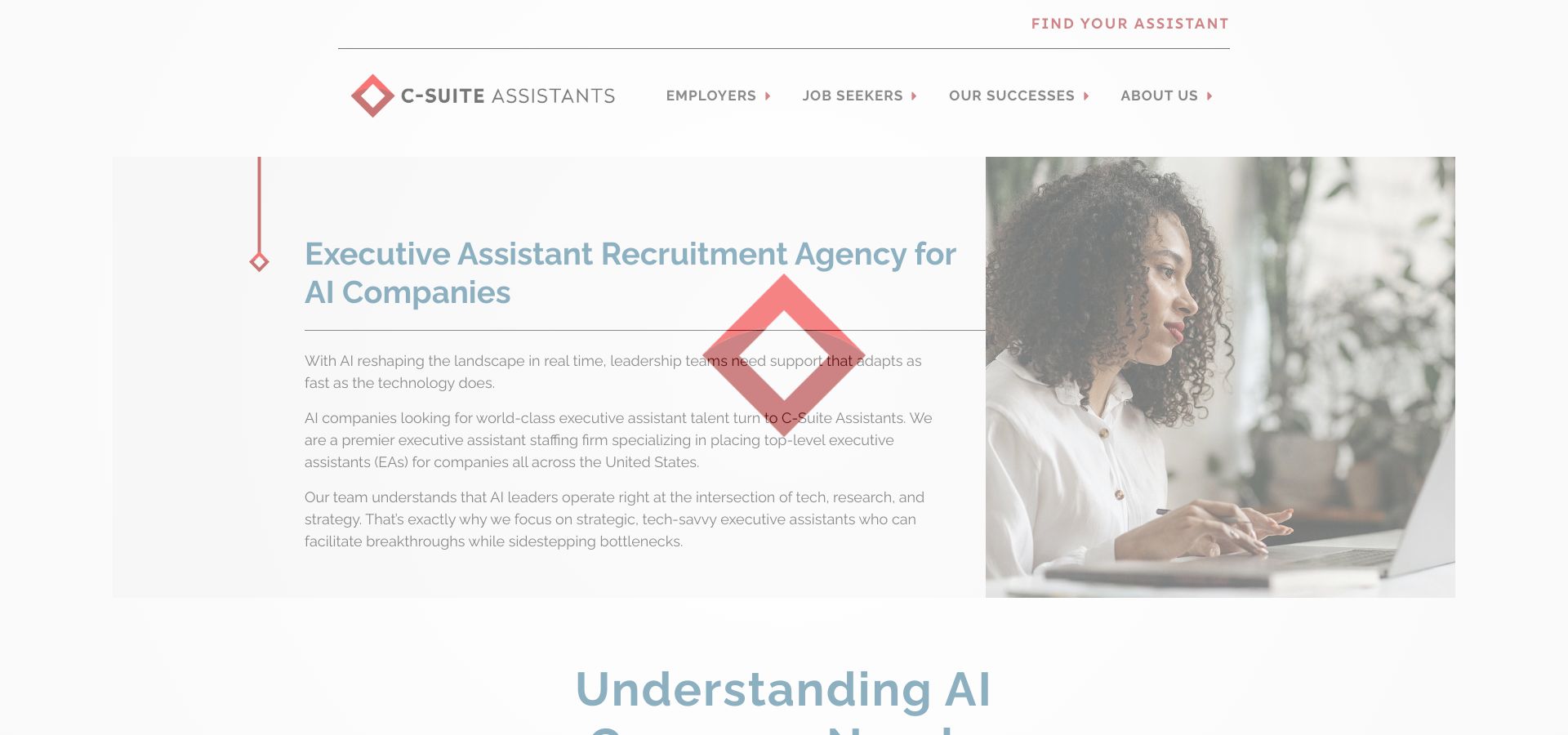
C-Suite Assistants Executive Assistant Recruitment for AI Companies – Website Screenshot
2. Robert Half: global reach when you need an EA yesterday
Robert Half is a proven large-scale option. With hundreds of offices and a database that refreshes daily, the firm can surface a contract EA in hours or present permanent candidates within a couple of weeks.
Robert Half Administrative and Executive Support Staffing – Website Screenshot
That reach matters when your CTO’s assistant just gave notice and quarter-end reporting starts Monday. Recruiters tap a deep bench of admin talent and test skills in calendaring software, CRM hygiene, and cross-time-zone coordination before résumés reach your inbox.
Flexibility is another draw. Hire a temp for a product-launch crunch, convert that person to full time if the fit clicks, or begin a direct search on day one. Fees stay predictable: hourly mark-ups on contract roles or about one-quarter of salary for permanent placements.
Think of Robert Half as a safety net. When bandwidth disappears and you can’t wait for a boutique search, their volume and infrastructure keep work moving.
3. Tiger Recruitment: polished support for globe-trotting executives
Tiger Recruitment began in London’s finance circles and now operates in New York, Dubai, and Zurich. This reach benefits tech CEOs who cross regions or manage investor bases on three continents.
Consultants start each search with a video interview that explores work cadence, communication quirks, and travel habits. They then shortlist career EAs who can shift from board-deck polish to a last-minute visa run without missing a beat.
Bespoke service requires patience. Expect a curated slate in about three weeks rather than three days, but each résumé arrives pre-referenced and skills-tested. Clients often hire the first candidate, saving interview cycles despite the longer lead time.
Fees match other boutiques at about 25 percent of first-year salary, and the firm offers a sliding guarantee tied to seniority. If your leadership team needs an EA who can handle global logistics and glide through a C-suite reception, Tiger is worth a look.
4. Boldly: fractional firepower from Fortune 500 veterans
Boldly pioneered the premium subscription model for executive assistants. Instead of a placement fee, you pay a flat monthly retainer and receive a W-2 employee who fits into your workflows for as few as 30 hours a month.
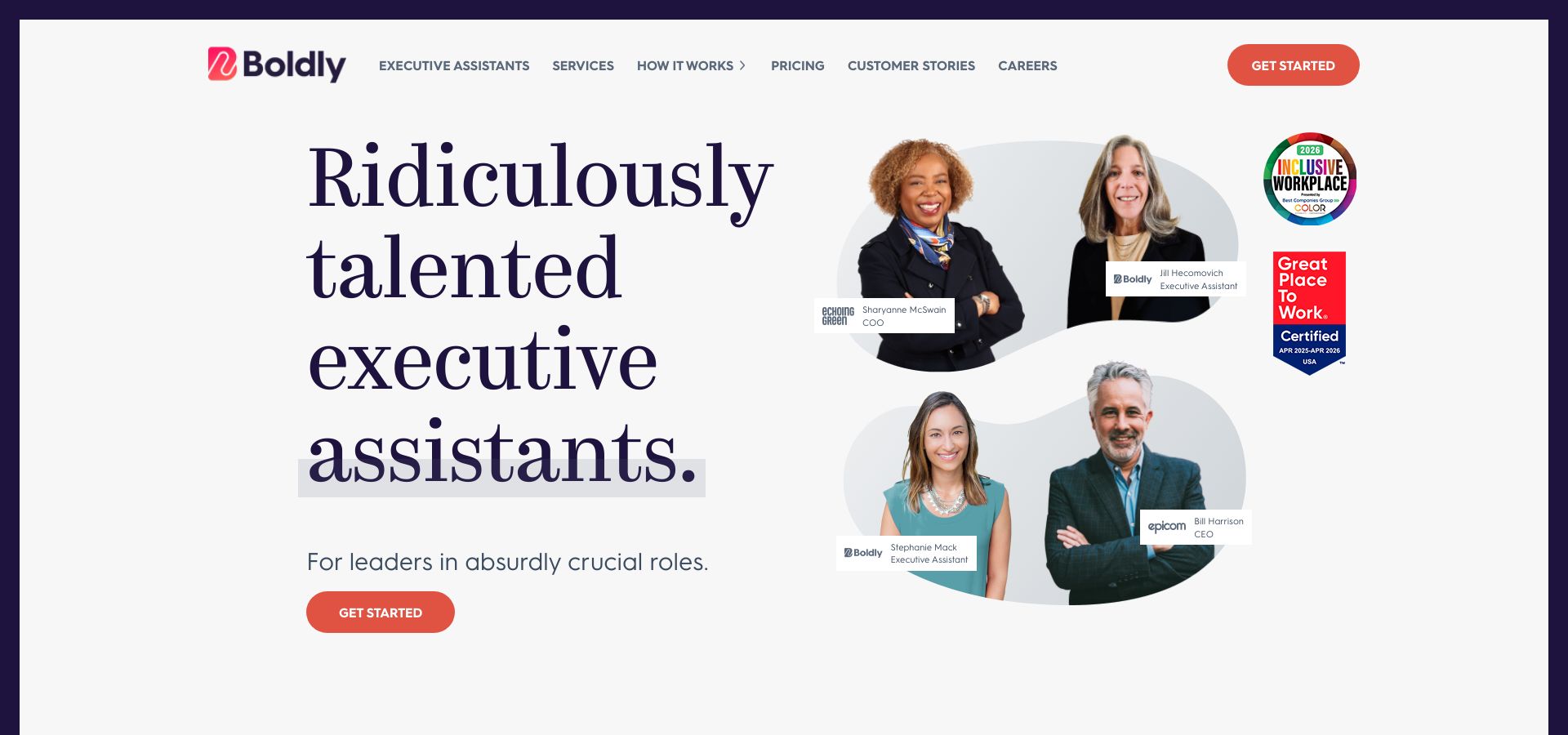
Boldly Premium Remote Executive Assistants Subscription Service – Homepage Screenshot
That structure fits Series A and B startups. You secure high-caliber help—many assistants spent a decade supporting leaders at Amazon, Microsoft, or Google—without adding a full-time salary.
Onboarding moves quickly. After you outline priorities, the client success team matches you with one or two candidates who already know your tech stack. Most founders begin working with their dedicated EA inside two weeks.
Plans start near fifty-five dollars an hour, billed in blocks. The rate covers payroll, benefits, and backup coverage, so there are no hidden costs when workload spikes.
If you want Fortune 500 polish at startup speed, Boldly’s fractional model frees your calendar while keeping burn low.
5. Belay: U.S.-based virtual assistants with values fit baked in
Belay began in the nonprofit world and now serves tech teams with the same personalized care. Every assistant lives in the United States, works standard business hours, and passes a rigorous background check before meeting a client.
Values alignment guides the match. During kickoff, a success consultant asks about your mission, communication style, and meeting cadence, then handpicks two or three candidates. Many founders sign an offer within ten days.
These assistants are seasoned—most bring eight to fifteen years in corporate roles—so they jump into project management tools and investor decks without a learning curve.
Pricing starts around forty-six dollars an hour in prepaid bundles, plus a modest onboarding fee that covers matching and orientation. You receive one invoice, while Belay handles payroll, benefits, and backup coverage.
Choose Belay when you want domestic time zones, precise business English, and an assistant who invests in your culture as much as your roadmap.
6. Maven Recruiting Group: Silicon Valley’s insider network
Maven Recruiting Group operates where product roadmaps, venture boards, and Series D milestones intersect. Based in San Francisco, the boutique agency focuses solely on administrative talent for startups, VCs, and high-growth tech firms.
Because its consultants attend Demo Days and meet with operations leaders, they often learn about an EA ready for a move before the résumé reaches LinkedIn. That inside track shortens hiring cycles; many clients receive a finalist slate within ten business days.
Culture fit sits at the center of each search. Recruiters map your company’s operating tempo—whether scrappy, process-light, or enterprise grade—and run scenario interviews to confirm a candidate can thrive in that environment. One founder compared their vetting to “unit tests for assistants.”
Fees sit near twenty percent of first-year salary, payable only on hire, with a ninety-day replacement guarantee. Temp-to-perm flexibility provides a safety valve if funding milestones shift mid-search.
For Bay Area teams that need an EA fluent in agile workflows and investor relations, Maven’s network and tech insight keep the search straightforward.
7. Athena: proactive partners trained for founder workflows
Athena addresses a common pain: first-time founders hire an assistant and still handle the tasks themselves. The company pairs each client with a full-time remote EA and coaches both sides on delegation until hand-offs stick.
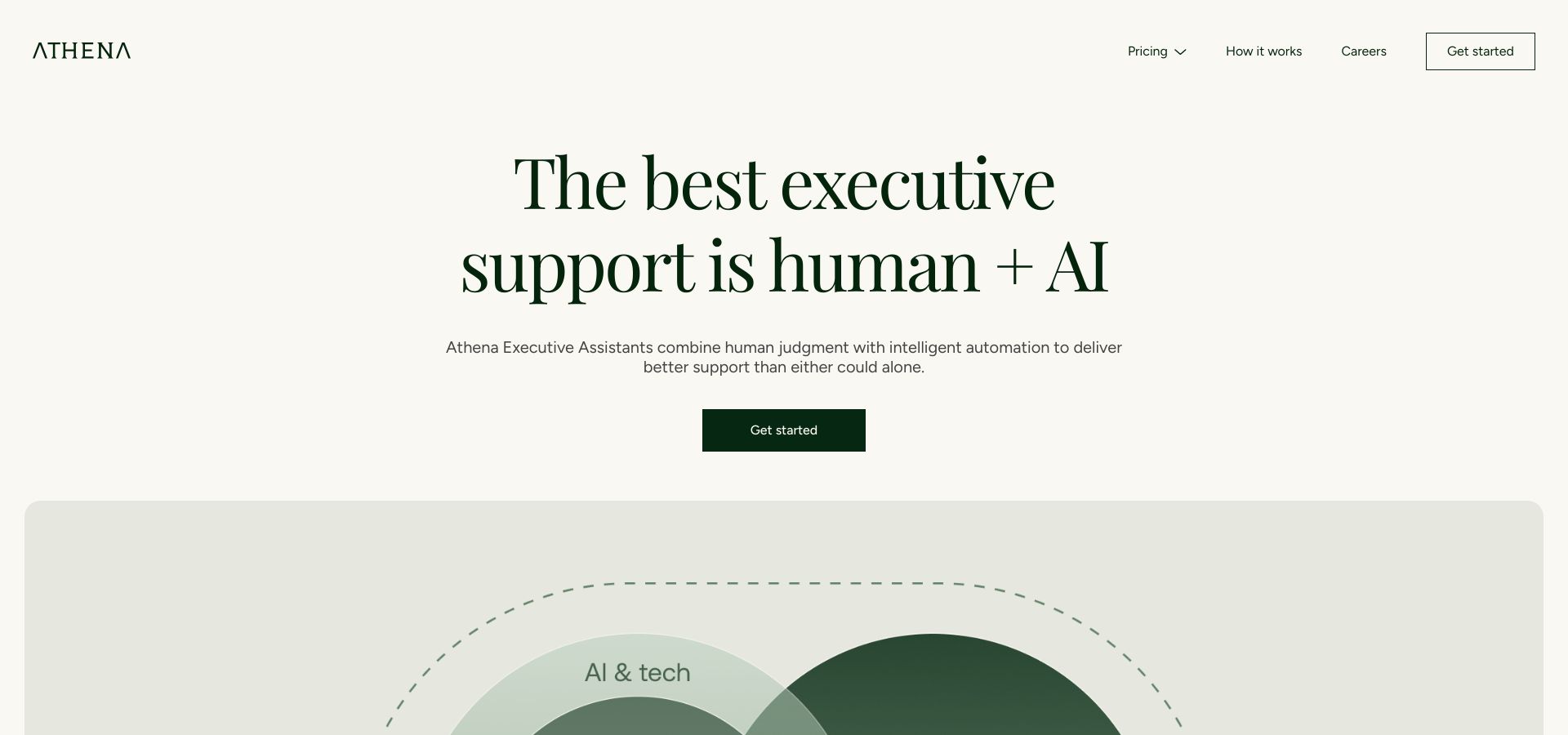
Athena Human + AI Executive Assistants for Founders – Homepage Screenshot
Most assistants are based in the Philippines, selected for fluent English and high initiative. Before day one, they complete Athena Academy, which covers inbox triage, Notion databases, prompt writing for AI tools, and the art of saying no diplomatically.
That preparation shows results quickly. Within the first month, many EAs set up a recurring task board, automate simple reports, and cut 15 to 20 hours from a founder’s week.
Pricing is a flat monthly fee, about three thousand dollars for forty hours a week. There is no placement charge or payroll hassle, and a customer success lead checks progress and steps in if priorities shift.
Choose Athena when you want an assistant who builds systems, not just follows instructions.
8. Prialto: team-backed support that never sleeps
Prialto surrounds each executive with a pod: a primary assistant, a backup assistant, and a process manager who documents every recurring task. If your EA calls in sick, the backup steps in with zero ramp-up because detailed playbooks live in Prialto’s knowledge base.
That always-available structure suits revenue teams. SaaS VPs use Prialto pods to update CRM pipelines overnight, prepare slide decks, and schedule demos across continents without gaps.
Engagements start around twelve hundred dollars a month per executive. The fee covers staffing, training, quality audits, and secure virtual desktops that keep company data off personal machines.
Clients praise the standard-operating-procedure discipline. Within weeks, the pod captures workflows in step-by-step guides, then refines them for speed. You gain additional capacity plus process maturity—an uncommon mix for startups still building operational muscle.
9. Caldwell: executive-search precision for mission-critical EA roles
Sometimes an assistant hire carries board-level visibility. That is when companies call Caldwell. The global firm applies the same rigor it uses for CFO searches to secure an EA who can shadow a CEO, manage investor relations, and still control the calendar.
Recruiters map target companies, discreetly approach sitting assistants, and run psychometric assessments before anyone reaches your office. Expect a shortlist of three elite candidates in roughly four to eight weeks—longer than a standard agency but designed for impact roles.
The service is retained and priced at about thirty percent of first-year salary. It is a premium, yet clients view it as insurance: miss once on a high-stakes EA and the cultural fallout costs far more.
Choose Caldwell when the assistant will manage board decks, confidential M&A discussions, or transition into a chief-of-staff path. Their search depth helps you make this hire only once.
10. Somewhere (formerly Support Shepherd): cost-savvy remote talent with a six-month safety net
Somewhere recruits college-educated executive assistants across the Philippines, Latin America, and Eastern Europe, then matches them to startups that need timezone overlap without Silicon Valley salaries.
The workflow stays simple. You share a job brief, recruiters test candidates for written English, ownership mindset, and tool fluency, and within two to three weeks you meet a shortlist. Once you hire, you pay a placement fee of about fifteen percent of the assistant’s annual salary.
After that, the EA becomes your employee—or you can keep the person on Somewhere’s payroll for a small admin add-on. Either way, the firm offers a free replacement for six months, the longest safety window in this guide.
Founders appreciate the cultural fit. Many Somewhere assistants already support U.S. startups, understand async communication, and document process improvements without prompting. If you need reliable remote support at roughly half the domestic cost, Somewhere makes every dollar count.
2026 trends shaping EA hiring
AI moves from buzzword to baseline
Embedded assistants now appear in almost every SaaS dashboard, and executive assistants feel the ripple first. Gartner projects that 40 percent of enterprise apps will ship with task-specific AI agents by the end of 2026, up from less than five percent in 2025.
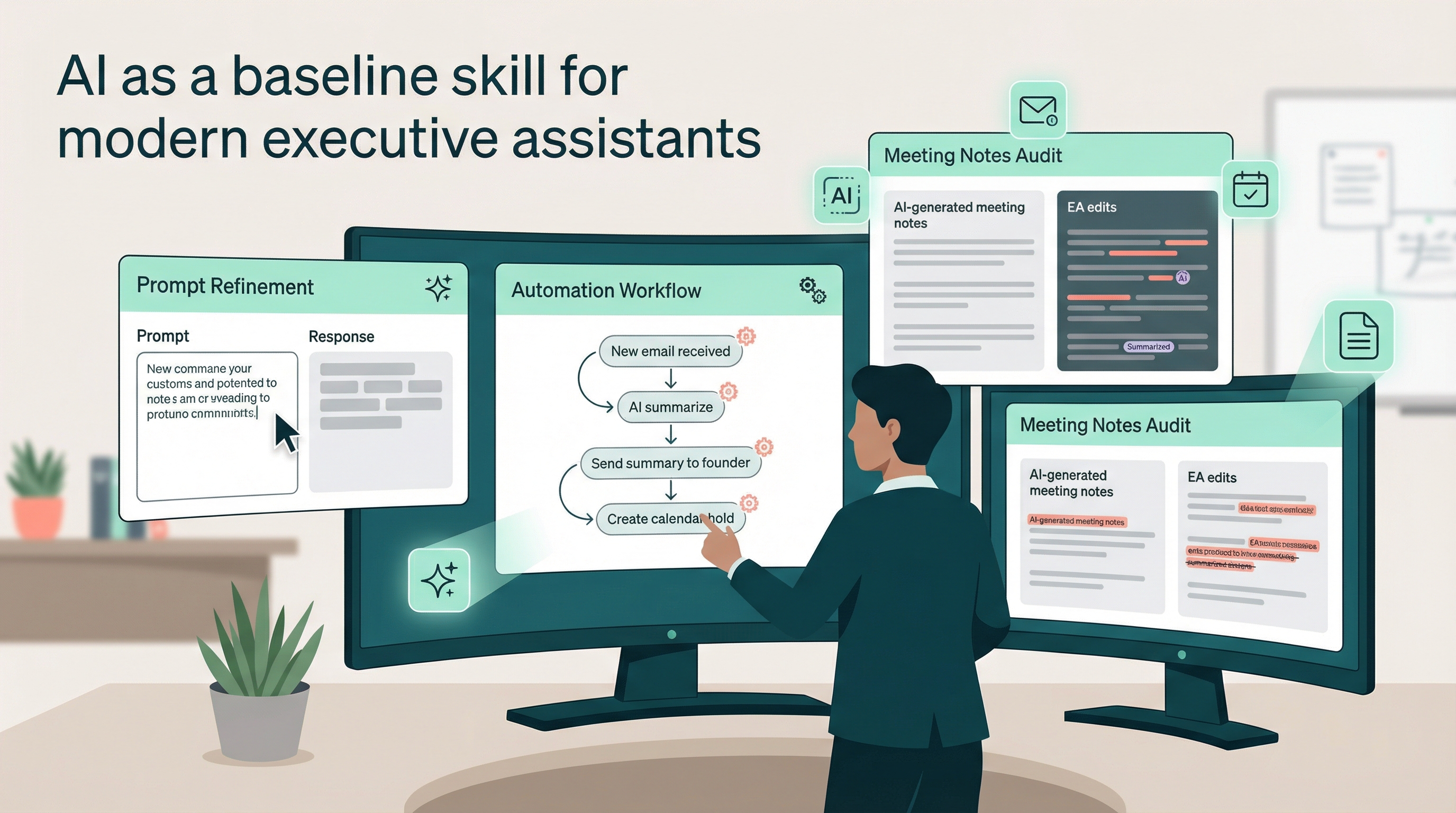
This shift changes the screening checklist. Founders now ask whether a candidate can refine a ChatGPT prompt, build a Zapier automation, or audit AI-generated meeting notes for nuance the bot missed. Agencies in this guide already test digital fluency and coach new hires on pairing judgment with machine speed.
EAs who adopt these tools expand capacity instead of fearing replacement. The results include leaner calendars, faster research cycles, and inboxes that empty overnight.
Remote talent, rising pay, and the push for diversity
The pandemic opened global hiring, and it never snapped back. Nearly half of EA searches now specify remote or hybrid, so agencies cultivate pipelines across every timezone. Around-the-clock support lowers cost structures and broadens the talent pool beyond traditional tech hubs.
The flip side is wage pressure. Senior U.S. executive assistants in hotspots like San Francisco command six-figure salaries. Many startups respond by hiring near-shore talent at about fifty percent savings or by choosing fractional plans that scale hours instead of headcount.
Diversity expectations also climbed. Boards want support teams that reflect user bases, and executives recognize the value of varied viewpoints in the room where priorities get set. Leading agencies now track candidate demographics, present balanced slates, and coach clients on inclusive interviews.
Remote reach, sharper pay math, and intentional DEI practices will shape the next wave of EA hiring. Firms that excel in all three areas will secure the assistants who keep leadership focused.
FAQs when choosing an EA staffing partner
How much does it cost?
For permanent roles, most agencies charge a single fee of about 20 to 30 percent of the assistant’s first-year salary. Hire an $85,000 EA and budget an extra $17,000 to $25,000. Subscription services change the model: you pay a monthly retainer, often $2,000 to $3,500, that bundles salary, benefits, and client support. Contract placements add an hourly markup, so a $35 wage can bill out at $50 or more.
How fast can we get someone in the seat?
Large firms such as Robert Half can place a temporary EA within days. Boutique recruiters average two to three weeks for a permanent shortlist, and retained searches at Caldwell take closer to six. If you need help right away, start with a temp or fractional plan while a full search runs in parallel.
What if the hire isn’t a fit?
Every reputable agency offers a replacement window. Ninety days is standard, and Somewhere extends it to six months. If performance slips, the recruiter restarts the search at no extra cost. Subscription providers simply assign a new assistant and manage the transition.
Do remote EAs pose security risks?
Top agencies mitigate risk with NDAs, background checks, and secure virtual desktops. Many follow zero-trust policies that keep company credentials off personal devices. Ask for their security playbook; the good ones share it upfront.
Should we pick a specialist or a general staffing giant?
Choose a specialist when the role demands niche insight—AI tools, investor relations, or international travel logistics. Their networks run deep, and culture matches often land faster. Select a large firm when volume or speed matters more than precision; they deliver deep rosters, temp coverage, and nationwide reach in a single call.
Conclusion
The right executive assistant amplifies leadership, accelerates projects, and safeguards precious focus time. Whether you need a fractional partner, a globe-trotting logistics pro, or a board-level confidant, the agencies in this guide can connect you with talent that meets the demands of modern tech companies. Invest the effort up front, and your new EA will pay dividends long after the first calendar invite lands.


Posted by inGenium Ltd

iNGENIUM Ltd. is an software development company from EU which delivers a full range of custom .NET, web and mobile solutions for different business to meet partner's demand.
The Power of Imagination Makes Us Infinite
Related Posts


Struggling to get your profile noticed no matter how often you post?

Imagine craving a beef burger really badly. So, you end up searching all the nearby restaurant options. What is the one thing that helps you decide where to order from?

The growth of digital advertising has unlocked countless opportunities but also introduced significant risks for modern marketing teams.

Few things test your patience quite like a printer that refuses to cooperate when you're in a rush.

Staffing shortages are squeezing hotels on both sides of the Atlantic.







Comments
comments powered by Disqus